

Low-cost safaris to Bwindi: One of the most frequented national parks in southwestern Uganda may be reached with cheap excursions to Bwindi. Budget tourists may enjoy a wonderful time in the park by participating in the cheapest activities available through inexpensive excursions to Bwindi. The primary activity in the park is gorilla trekking, which is less costly than in Rwanda, where a permit costs $1500.
Additional low-cost activities in Bwindi include birding, where you can see more than 350 bird species, a visit to the Batwa community to meet the pygmies, as well as hiking and nature walks, which allow you to see most of the park’s sights on foot. Bwindi has 200 tree species, 350 bird species, 120 mammal species, and 10 primate species.
A trip to Bwindi that is reasonably priced requires a limited number of days and participation in a few activities. The priciest excursion on this tour is gorilla trekking, but it’s worthwhile since it gives visitors the chance to see endangered mountain gorillas. In addition to these activities, there are many other inexpensive options available to all tourists.
Budget tourists visiting Bwindi should consider going to the national park during the off-season, which runs from March through May and October through November. The reason for this is that the lodging is quite affordable, which aids in financial savings. Even the local tour companies offer discounts on the majority of their tour packages during the off-seasons in an effort to entice the few tourists who are considering seeing the park. Road transport to Bwindi Park is less expensive than flying, so travelers should think about using it to save money on their trip.
Travelers seeking inexpensive excursions to Bwindi should think about reserving lodging that fits their budget, such as budget or mid-range hotels. The majority of gorilla trekking areas provide budget and mid-range lodging options that are adequate for tourists, and some of them include Broadbill Forest Camp, Nshongi Gorilla Nest, Gorilla Safari Lodge, Bwindi Forest Lodge, Agandi Lodge, Bakiga Lodge, and Engagi Lodge, among others.
On a low-cost trip in Bwindi, what should one do?
Trekking gorillas
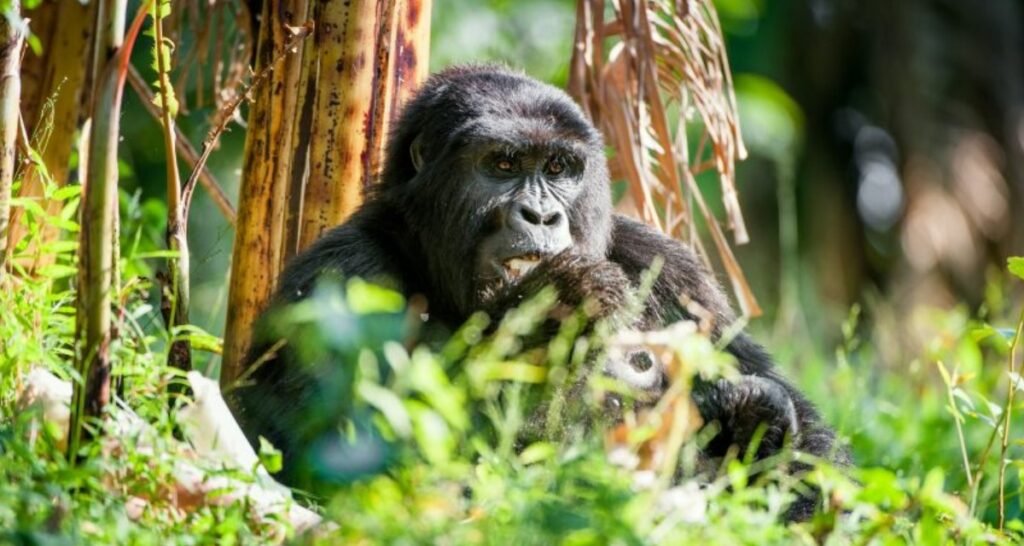
The most popular activity in Bwindi is gorilla trekking, where 19 mountain gorilla families are available for trekking in various parts of the park. A gorilla trekking permit from the Uganda Wildlife Authority is necessary in order to trek these mountain gorillas. On the day of the briefing, you will show the park wardens this permission. Each gorilla family is trekked by no more than eight people, who are accompanied by armed ranger guides.
At the sector offices, where trekkers are taught about the guidelines and restrictions of the activity, groups are assigned gorilla families to trek and provided armed ranger guides to lead them in the jungle, and gorilla trekking in all sectors begins early in the morning. The gorilla family takes trekkers between two and seven hours to find, and along the way they may encounter various park wildlife, birds, and flora. Trekkers follow the rules and regulations for an hour as they observe mountain gorillas.
Getting used to gorillas
Although somewhat pricey, gorilla habituation is well worth the investment when compared to gorilla trekking. The cost of a gorilla habituation permit, which allows you four hours of time with mountain gorillas, is $1500 per person. The Nkuringo and Rushaga regions of Bwindi are where mountain gorillas are trained. With habituation, one is given four hours with mountain gorillas and is able to participate in the actions that help gorillas adjust to the presence of humans around them, making this adventure distinct from gorilla trekking.
Birding
You may choose to go birding after gorilla trekking or do only birding on a journey to Bwindi. the park’s status as one of the top birding locations in the nation. The Buhoma region of Bwindi, where there are several birding routes, is the ideal place to go on birding trips. Bwindi is home to more than 350 bird species, and skilled birders may see the majority of them in a single day.
The brown-eared woodpecker, hairy-breasted barbet, black bee-eater, crowned hornbill, mottled swift, bar-tailed trogon, Horus swift, grey-crowned crane, spotted eagle owl, blue-headed coucal, Eurasian hobby, red-eyed dove, olive pigeon, African jacana, African fish eagle, hammerkop, northern pintail, black kite, and little grebe are just a few of the birds you might see in Bwindi.
Tours to the Batwa community
For visitors who are interested in learning about African culture, this is a really cost-effective option. The local people who first lead you on a short nature walk through the jungle also lead the Batwa community tours. This is done so you can learn more about how they lived off fruits, honey, roots, and small animals in the jungle.
You’ll get to see various households during your tour to the Batwa, where you’ll see locals going about their daily routines in their homes. You will have the opportunity to engage with the elders and learn about their history. You may support residents by visiting gift shops, seeing the African teaching in schools, and visit community hospitals to see and aid the sick. The community women will entertain you with drama and dancers.
Hiking in the outdoors
Nature hikes in Bwindi cost $30 for non-resident foreigners, $10 for resident foreigners, and UGX10,000 for East African nationals. Various walking routes are utilized for nature hikes in all sector offices. Visitors may see a variety of park wildlife during nature walks, including elephants, buffalos, duikers, giant forest pigs, bushbucks, bushpigs, olive baboons, monkeys, birds, plants, and water sources.
When is the best time to go to Bwindi?
Although there are days that are superior to others, you may do anything in Bwindi at any time of year. Because of the low or absent rainfall during the dry months of June through September and December through February, which keeps the hiking pathways muddy and slippery, the sparse vegetation offers beautiful views of the park’s features, and the roads leading to the park are accessible, it is best to take tours in Bwindi during these times.
Bwindi is accessible to visitors, particularly those on a low budget, during the rainy seasons of March to May and October to November, where they may take advantage of significant discounts on lodging. Travelers visiting Bwindi for excursions during the rainy season should be aware that the hiking routes are muddy and slick, the vegetation is dense and tall, making it difficult to see the park’s attractions, and the roads leading to the park are impassable.