

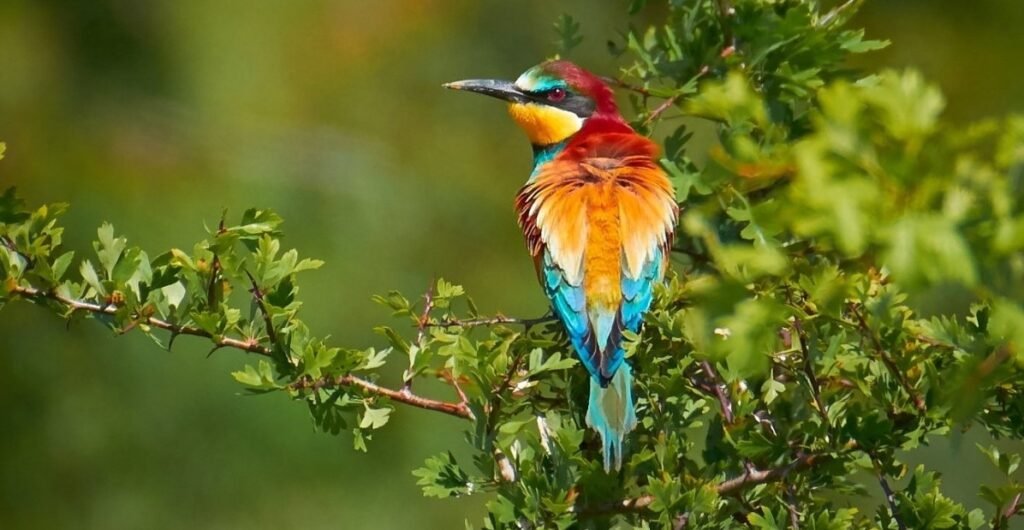
Birding trails in Bwindi: The finest birding paths in Bwindi are those that have been built within the park to facilitate birders’ encounters with a wide variety of bird species. With over 350 bird species, some of which are unique to the Albertine region, Bwindi is among the top birding areas in the nation.
Visitors who come to Bwindi for gorilla trekking and end up participating in birding activities during their free time are there because the park is well-known for it. Anyone who enjoys birds may arrange a birding trip in the park with the park management or their local tour operator in Bwindi.
Routes for birdwatching in Bwindi
The waterfall Trail
One of the greatest birding routes in Bwindi is the waterfall trail, which is found in Buhoma sector, which is in the northern part of the park. After three hours of hiking, you will have encountered many birds and the greatest birding locations on the route. Because they utilize the route to connect with nearby communities, bird lovers will also encounter a variety of park animals, primates, birds, and, on occasion, locals.
Trail through the bamboo area
Tourists are taken up to the park’s highest peak via one of the longest hiking routes in Bwindi. The route, located in the park’s eastern Ruhija sector, is reputed to be among the greatest birding trails in the entire park. The Bamboo Zone Trail takes 7 hours to complete, and during that time, a skilled birdwatcher would have spotted the majority of Bwindi’s birds as well as other sights.
The Mubwindi Trail
On the northern side of Bwindi, in the Buhoma district, is the 4–5-hour Mubwindi Trails. The trail is one of the greatest birding trails in the park, if not the greatest, with a variety of birding locations. The Mubwindi trail leads to Mubwindi swamp, which is home to a variety of bird species and certain primates. If you enjoy birds and are staying in the Buhoma neighborhood of Bwindi, don’t miss the chance to go birding on this route.
Ivy River Trail
The Ivy River Trail is a route that links the Nkuringo and Buhoma sectors. With so many different bird species documented along this path thus far, it is said to be an excellent trail for birding. The Ivy River Trail is 14 kilometers long, and it takes four to six hours to finish. In addition to seeing some of the park’s primates, mammals, flora, and water resources, bird enthusiasts will also have the chance to utilize this path.
National Park of the Undefendable Bwindi Impenetrable Forest
Among the birds you are likely to see along these trails are the palm nut vulture, black kite, hadada ibis, lizard buzzard, black-headed heron, African honey, scaly francolin, African jacana, European honey buzzard, great blue turaco, common cuckoo, alpine swift, African wood owl, diederik, narina tragon, crowned hornbill, hairy-breasted barbet, grey-crowned crane, white-headed barbet, shining blue kingfisher, and greater honeyguide.
Additional birds to observe include the fine-banded woodpecker, scaly-throated honeyguide, buff-spotted woodpecker, dwarf honeyguide, spot-flanked barbet, African green broadbill, grey wagtail, black cuckoo shrike, barn swallow, mosque swallow, mountain wagtail, Toro olive greenbul, little greenbul, western nectar, forest crested alethe, wood warbler, common stone chat, Kivu ground thrush, and African paradise flycatcher, among others.
What does it cost to go birding in Bwindi?
A birding permit is required in order for anyone to go birding in any of the sections of Bwindi. The park headquarters in Bwindi sells the birding permit, which costs $30 for non-resident foreigners, $25 for resident foreigners, and UGX20,000 for citizens of East Africa. Tourists going to Bwindi for birding, not gorilla trekking, should be aware that the park entrance charge is in addition to the birding permits. The entry fee for the park is UGX20,000 for citizens of East Africa, $30 for foreign residents, and $40 for foreign non-residents.
In Bwindi, when is the best time to go birdwatching?
The ideal time for birdwatching in Bwindi is between December and February because the park is home to so many migrating birds at that time. The park receives very little rain, making the birding trails dry and accessible; the vegetation is sparse, short, and scattered with excellent birding prospects; and the routes leading to the park are well maintained.
Birding is at its best at Bwindi from April through June, and bird enthusiasts may still go there. For the majority of bird species, this is the time of year when they build their nests. Travelers should be aware that these are rainy months, so there is a lot of rain in the park, making the birding trails muddy and slick; the vegetation is tall and dense with excellent bird viewing opportunities; and the roadways leading to the park are impassable.