

Where in Uganda to spot Giraffes. Uganda isn’t the first country most travellers associate with giraffes, and that’s exactly what makes seeing one here so rewarding. Uganda is home to the Nubian giraffe, previously known as the Rothschild’s giraffe, one of the most endangered giraffe subspecies in Africa, and the country’s national parks host a genuine conservation comeback story built almost entirely on careful translocation between just a handful of parks. Unlike Kenya or Tanzania, where giraffes roam widely across dozens of reserves, Uganda’s entire giraffe population is concentrated in three protected areas, which actually makes planning a giraffe-focused safari refreshingly simple once you know where to look. Here’s exactly where to find them on a safari with Afrigaze Uganda Safariz.
Murchison Falls National Park: Uganda’s Giraffe Stronghold
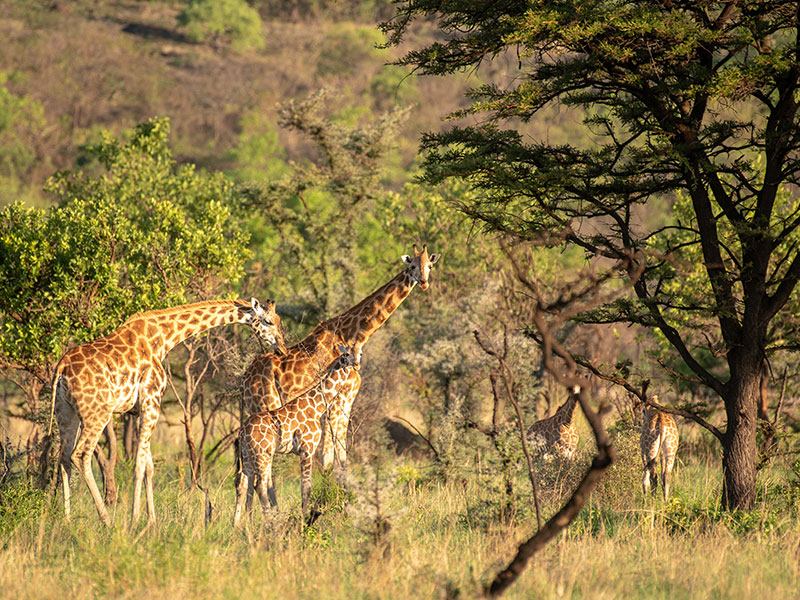
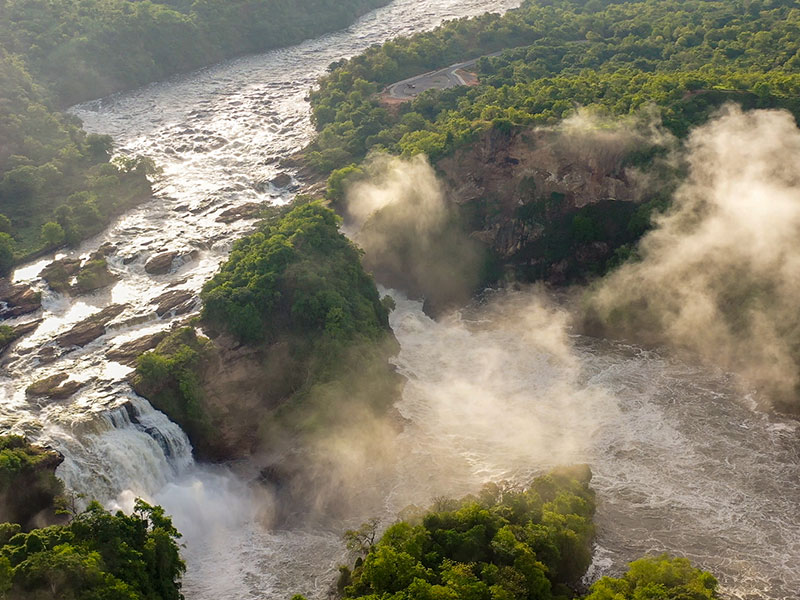
Murchison Falls National Park holds by far Uganda’s largest giraffe population, over 1,500 individuals according to the Uganda Wildlife Authority’s official giraffe page. Most are found on the park’s northern bank across the open Buligi plains, though a smaller group of 45 giraffes now also roams the southern bank, descended from 18 animals introduced in January 2016 with the Giraffe Conservation Foundation, followed by 19 more in August 2017. A game drive here, detailed on the official Murchison Falls park page, offers close to guaranteed giraffe sightings alongside elephants, lions, and the Nile itself. The Buligi peninsula, sandwiched between the Victoria Nile and Albert Nile, is the single most reliable spot in the whole country, and it’s common to see herds of a dozen or more giraffes browsing acacia in a single morning drive, often mixed in with buffalo and Jackson’s hartebeest for a classic East African savannah scene.
Lake Mburo National Park: A Conservation Success Story
Giraffes vanished from Lake Mburo National Park roughly a century ago to poaching and disease. The Uganda Wildlife Authority reintroduced 15 giraffes from Murchison Falls in July 2015, and the population has grown steadily through natural breeding ever since, documented on UWA’s official Lake Mburo page. Because Lake Mburo is Uganda’s smallest savannah park and the closest to Kampala and Entebbe, it’s often the easiest place to see giraffes on a short trip without travelling all the way north. It’s also one of the few parks in East Africa where zebra, eland, impala and giraffe share the same open grassland within a couple of hours of the capital, which makes it a favourite add-on for travellers short on time but unwilling to skip big game entirely.
Kidepo Valley National Park: Giraffes on Uganda’s Wild Frontier
Kidepo Valley National Park, Uganda’s most remote park, had its giraffe population fall to just three animals in the 1990s due to civil unrest and illegal hunting. Fourteen giraffes were translocated there from Murchison Falls in August 2018, rebuilding a population that stood at 36 by the same year, per the official UWA Kidepo Valley page. Our guide to tourist attractions in Northern Uganda covers what else makes this far-flung park worth the journey.
Where You Won’t Find Giraffes: Queen Elizabeth and Bwindi
It’s worth knowing where giraffes don’t live, too. Queen Elizabeth National Park, covered on the official UWA park page, has no giraffe population, and neither does gorilla-trekking territory further south. If giraffes are on your must-see list, build your itinerary around Murchison Falls, Lake Mburo, or Kidepo specifically rather than assuming every savannah park has them.
Rothschild’s or Nubian? A Quick Note on the Name
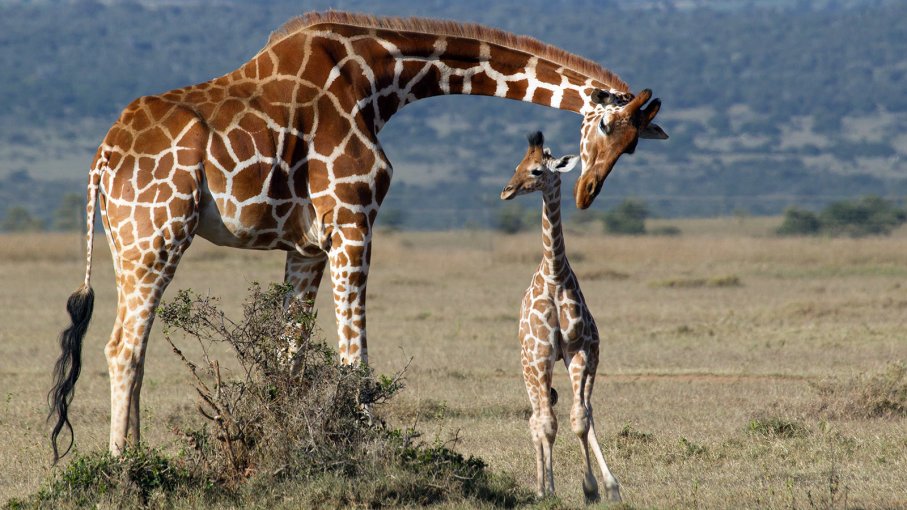
You’ll see both names used interchangeably in Uganda. Rothschild’s giraffe was the long-standing common name; taxonomists have since reclassified the subspecies under the broader Nubian giraffe group, and the Uganda Wildlife Authority’s own materials now use “Nubian giraffe” as the current term. Either name refers to the same animal you’ll see in Murchison Falls, Lake Mburo, or Kidepo, so don’t be thrown off if a guide or brochure uses one term and a park sign uses the other.
Best Time and Way to See Giraffes in Uganda
Giraffes are visible year-round, unlike gorilla trekking, which depends on trail conditions. The dry seasons, June to September and December to February, do make general game viewing easier as vegetation thins and animals gather near water. A standard game drive vehicle gets you close enough for excellent photographs, and Lake Mburo additionally permits guided walking safaris, one of the few places in Uganda where you can approach giraffes on foot with an armed ranger.
Practical Tips for Planning a Giraffe Safari in Uganda
Most visitors enter Uganda on an e-visa, applied for in advance through the official Uganda Directorate of Citizenship and Immigration Control portal, so it’s worth sorting that before booking flights rather than after. Park entry fees for Murchison Falls, Lake Mburo and Kidepo Valley are charged per 24-hour period and vary by residency status, and it’s a good idea to pack neutral-coloured clothing, sunscreen, and binoculars, since giraffes are often spotted at a greater distance than lions or elephants before your vehicle closes in for a proper look. Self-drive is possible in Lake Mburo, but Murchison Falls and Kidepo are large enough that a guided vehicle with a driver who knows the giraffe-frequented tracks will save you time and considerably improve your sighting odds.
Giraffe-Focused Safari Itineraries
Our 3-day Murchison Falls safari and 3-day Murchison Big Five wildlife safari both put you directly in Uganda’s largest giraffe population within a short trip, and our Murchison Falls boat ride adds a Nile-side wildlife-viewing option beyond the game drive itself. Travellers with more time can see giraffes at more than one location as part of our 10-day wildlife, chimpanzee and gorilla safari or 7-day best of Uganda safari, both of which can be routed through Lake Mburo en route to or from the northern parks.
Conservation Efforts Behind Uganda’s Giraffe Recovery
Every giraffe population outside Murchison Falls exists today because of deliberate translocation, coordinated by the Uganda Wildlife Authority alongside the Giraffe Conservation Foundation, moving animals from the healthy northern-bank population to rebuild numbers elsewhere. A newer effort at Pian-Upe Wildlife Reserve, begun in 2019, aims to establish a fourth population from scratch. Full details on these programmes and current park entry fees are published in the official UWA Conservation Tariff and UWA booking terms.
Planning Your Uganda Giraffe Safari with Afrigaze Uganda Safariz
Uganda’s giraffe conservation work is promoted alongside the country’s wider wildlife tourism by the Uganda Tourism Board and the Ministry of Tourism, Wildlife and Antiquities. Browse our full destinations and safaris pages, check our FAQ page, see more wildlife photos on our gallery, or reach out through our contact page to build a giraffe-focused itinerary around your dates.
Want to see Uganda’s rarest giraffes up close? Talk to our team and we’ll route your safari through the parks that guarantee a sighting.
Frequently Asked Questions
Which Uganda park has the most giraffes?
Murchison Falls National Park, with over 1,500 individuals, the vast majority of Uganda’s giraffe population, concentrated mainly on the park’s northern bank.
Can I see giraffes close to Kampala?
Yes. Lake Mburo National Park, roughly three hours from Kampala, holds a smaller but growing giraffe population and is the most convenient option for travellers without time for the longer trip north.
Are giraffes found in Uganda’s gorilla-trekking parks?
No. Bwindi and Mgahinga are dense forest habitat unsuited to giraffes; they’re found exclusively in Uganda’s savannah parks, Murchison Falls, Lake Mburo, and Kidepo Valley.
Do I need a visa to visit Uganda’s giraffe parks?
Most nationalities need a Uganda e-visa, applied for online before arrival. It isn’t specific to any park, so the same visa covers Murchison Falls, Lake Mburo, and Kidepo Valley on a single trip.
How long do I need to see giraffes in Uganda?
A single full day is enough at Lake Mburo or Murchison Falls for a solid chance of sightings, though a 2 to 3 day stay at Murchison Falls gives you multiple game drives and better odds of encountering the rarer southern-bank herd.
Uganda’s giraffes are a quieter conservation story than its gorillas, but no less remarkable: a population rebuilt almost entirely through deliberate translocation between three parks. Get in touch with Afrigaze Uganda Safariz to build a safari around seeing them for yourself.