

Self drive Safaris in Uganda. Uganda is one of the more forgiving countries in East Africa for a self-drive safari, provided you know which parks suit it and which don’t. A 4×4 rental, a Uganda-issued or international driving permit, and a bit of route planning will get an independent traveller through Murchison Falls, Lake Mburo, or Queen Elizabeth without ever booking a guided vehicle. But self-drive isn’t the right fit everywhere, and Uganda Wildlife Authority rules, park roads, and permit requirements differ enough between parks that it pays to plan before you commit. Here’s what to know, drawn together by Afrigaze Uganda Safariz for travellers weighing self-drive against a guided safari.
Is Self-Drive Actually Allowed in Uganda’s National Parks?
Yes. Uganda Wildlife Authority permits private vehicles inside most savannah parks once you’ve paid the standard park entrance fee at the gate, and you don’t need a licensed guide in the vehicle to do a game drive in parks like Murchison Falls, Lake Mburo, or Queen Elizabeth National Park. What you do need is a valid park entry ticket, a roadworthy vehicle suited to the terrain, and a willingness to follow UWA’s in-park driving rules, which are stricter and more actively enforced than most first-time self-drivers expect.
Which Uganda Parks Work Well for Self-Drive
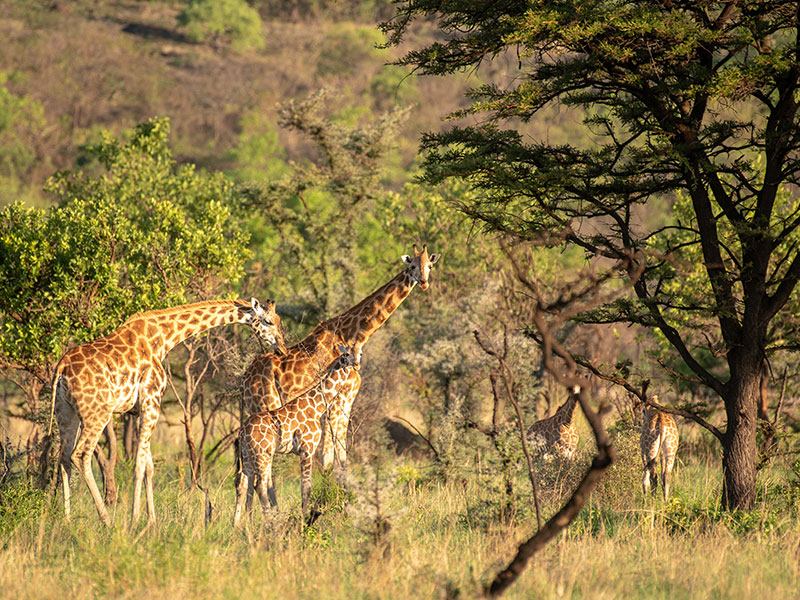
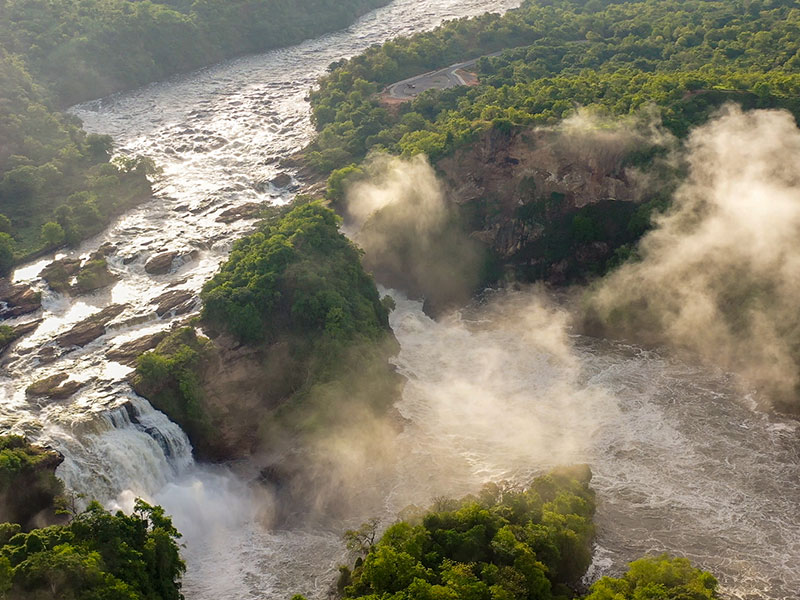
Lake Mburo National Park, profiled on the official UWA Lake Mburo page, is Uganda’s easiest self-drive park: it’s small, the tracks are well maintained and well signed, it’s only about three hours from Kampala, and a standard 4×4 with reasonable clearance handles it comfortably even in light rain. Murchison Falls National Park, covered on the official Murchison Falls park page, is also self-drive friendly and is Uganda’s most popular self-drive destination, though its size means a GPS or offline map and a full tank matter more here than at Lake Mburo. Queen Elizabeth National Park, detailed on the official UWA Queen Elizabeth page, rounds out the trio, with good gravel roads through the Kasenyi plains and along the Kazinga Channel front, though the Ishasha sector’s tree-climbing lions sit down a rougher, more remote stretch of track worth researching in advance.
Where Self-Drive Isn’t the Right Choice
Bwindi Impenetrable National Park and Mgahinga National Park are gorilla trekking territory, and treks are on foot with an armed UWA ranger guide regardless of how you arrive, so self-drive only gets you to the trailhead, not through the forest. Kibale Forest National Park‘s chimp tracking works the same way. Kidepo Valley National Park, Uganda’s most remote park, is technically open to self-drive but the distance, road quality, and limited fuel and mechanical support along the way mean most travellers are better served booking a guided vehicle or one of our Northern Uganda itineraries instead of risking a breakdown hours from the nearest town.
What Vehicle You Actually Need
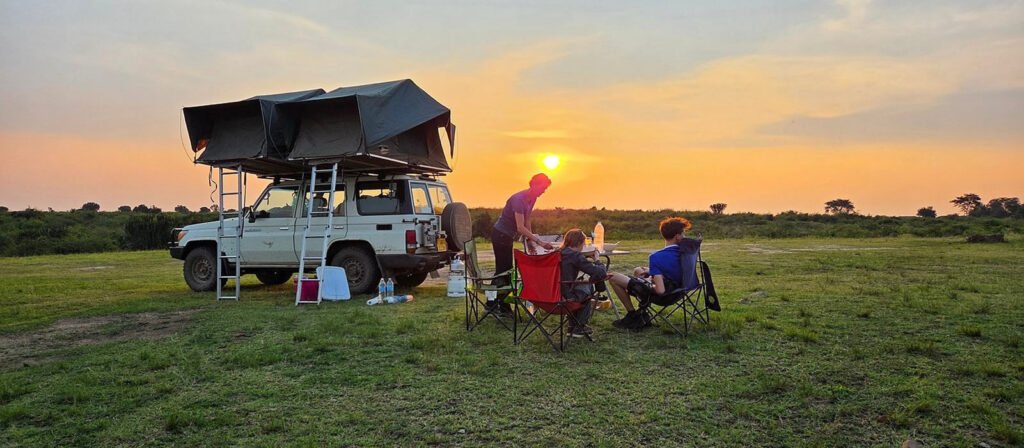
A 4×4 with genuine ground clearance is non-negotiable for anything beyond Lake Mburo’s main tracks; a two-wheel-drive sedan will get stuck the first time it rains on a murram road. Most self-drive rental companies in Kampala or Entebbe supply a Toyota Land Cruiser, RAV4, or similar SUV with a rooftop tent option, a full-size spare tyre, a jerry can, and a car fridge for longer trips. Book with enough lead time to confirm the vehicle comes with a valid logbook, insurance that explicitly covers national park driving, and a spare key, since none of these are guaranteed with budget operators.
Driving Permits and Documents You’ll Need
Foreign visitors driving in Uganda need either an International Driving Permit alongside their home licence, or a temporary Uganda driving permit, which some car rental companies can arrange on your behalf. You’ll also need your passport and a valid Uganda visa or East Africa Tourist Visa, applied for in advance through the official Uganda Directorate of Citizenship and Immigration Control portal. Carry physical and digital copies of your licence, permit, passport photo page, and visa approval, since UWA rangers and police checkpoints on the main highways routinely ask to see them.
Park Fees and How to Pay Them
Entrance fees are charged per person per 24-hour period and vary by residency status and park, on top of a separate vehicle entry fee. The current rates for every park are published in the official UWA Conservation Tariff, and UWA’s booking terms explain how advance payment and receipts work. Keep every receipt for the length of your stay, since rangers at internal checkpoints can ask to see them, and a lost receipt can mean paying again.
Speed limits are strictly enforced. Inside Murchison Falls National Park the posted limit on the transit route is 40 km/h, with a 100,000 UGX fine for speeding and a $500 per-animal fine for hitting wildlife. UWA has publicly stated that speeding vehicles kill an estimated three to five protected animals a day across Uganda’s parks, and drivers found responsible for a wildlife death can face fines up to 50 million UGX or up to ten years imprisonment under the Wildlife Act. Similar low speed limits and no-stopping rules apply on transit routes through other parks.
In-Park Driving Rules to Know Before You Go
Most parks close their gates at 7:00pm and open at 7:00am, and self-drive visitors are expected to be inside the gate before closing and off internal tracks by dark; night driving off designated routes is not permitted. Stay on marked tracks rather than cutting across open ground, since off-track driving damages habitat and is against park regulations. Full details for transit traffic through Murchison Falls specifically, including designated routes and per-person penalties for straying off them, are published in UWA’s official transiting guidelines. Hooting at or feeding wildlife, littering, and unauthorised stops away from designated viewpoints all carry on-the-spot fines as well.
Road Conditions Between Parks
Uganda’s trunk highways connecting Kampala to Masindi, Fort Portal, and Mbarara are tarmacked and generally in good condition, maintained by the Uganda National Roads Authority, which is also the best source for current road closure or diversion notices before a long self-drive trip. The final stretch into most parks, and the internal park tracks themselves, are unpaved murram roads that turn slick and occasionally impassable after heavy rain, particularly during the March–May and October–November wet seasons, so build a buffer day into any self-drive itinerary during those months.
Fuel, Connectivity, and Practical Planning
Fuel stations thin out fast once you’re past the main towns, so fill up fully in Masindi, Kabale, or Mbarara before heading into a park, and carry a jerry can as backup for longer routes like Kidepo. Mobile signal drops out completely inside most parks, so download offline maps in advance and let your lodge or the park headquarters know your planned route and return time. A printed or downloaded copy of your FAQ page reference and booking confirmation is worth keeping alongside your paperwork in case a gate attendant needs to verify your reservation.
Self-Drive vs. a Guided Safari: Which Should You Choose?
Self-drive suits travellers who want full control of their schedule, are comfortable navigating unfamiliar roads, and are visiting parks like Lake Mburo, Murchison Falls, or Queen Elizabeth where the infrastructure supports it. A guided safari makes more sense for Kidepo’s remoteness, for gorilla and chimp trekking areas where a ranger guide is mandatory anyway, or simply if you’d rather have a driver-guide who already knows where the lions were seen that morning. Many of our own clients combine the two, self-driving the easier southern parks and joining a guided vehicle for the trickier northern circuit; our 3-day Murchison Falls safari and 3-day Murchison Big Five wildlife safari are both built as fully guided alternatives for exactly that reason.
Sample Self-Drive Route: Kampala to Murchison Falls and Back
A popular five-day self-drive loop runs Kampala to Masindi (about 4 hours), then on to Murchison Falls National Park via the Kichumbanyobo gate, with two nights near Paraa for game drives and a Nile boat trip such as our Murchison Falls boat ride, before returning to Kampala the same way. Travellers wanting to see more in one trip often extend this into our 5-day wildlife and primate safari or the longer 10-day wildlife, chimpanzee and gorilla safari, swapping the self-driven legs for a guided vehicle once the route reaches Kibale or Bwindi.
Booking Tourism-Wide Support for Your Trip
Uganda’s broader tourism infrastructure, including licensed tour operators and updated travel advisories, is coordinated by the Uganda Tourism Board and the Ministry of Tourism, Wildlife and Antiquities, both worth checking before you travel for any updated entry requirements. If you’d rather skip the logistics of self-drive altogether, browse our full destinations and safaris pages, or reach out through our contact page and we’ll build a guided or hybrid itinerary around your dates.
Not sure whether to self-drive or book a guide? Talk to our team and we’ll map out the safest, most efficient route for the parks you want to see.
Frequently Asked Questions
Do I need a guide to self-drive in Uganda’s national parks?
No, not for game drives in savannah parks like Murchison Falls, Lake Mburo, or Queen Elizabeth. Gorilla and chimp trekking always require a UWA ranger guide on foot, regardless of how you arrived at the park.
Is a 2WD car enough for a Uganda self-drive safari?
Only for the tarmac approach roads. Once inside a park, or on the final unpaved stretch to one, you need a 4×4 with real ground clearance, especially in the wet season.
Can I self-drive to Kidepo Valley National Park?
It’s permitted, but the distance, road conditions, and lack of fuel and mechanical support along the way make it one of the harder self-drive routes in Uganda; most travellers book a guided vehicle for Kidepo specifically.
Self-drive safaris put Uganda’s easier parks within reach of any confident, well-prepared driver, but knowing which parks, permits, and rules apply before you set off makes the difference between a smooth trip and an expensive one. Get in touch with Afrigaze Uganda Safariz to plan a self-drive, guided, or combined itinerary that fits your route.