

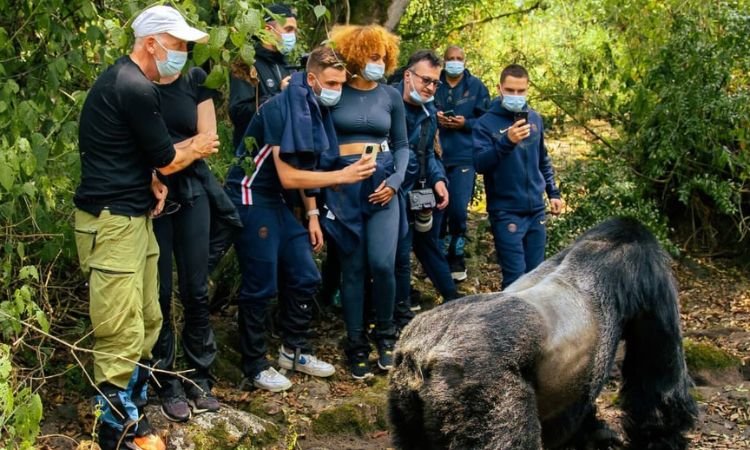
Gorilla trek safaris for old people. Age alone doesn’t rule out gorilla trekking in Uganda — older travelers complete treks every season, often with a little extra planning around fitness, pacing, and support. There’s no upper age limit for gorilla trekking, and with the right sector choice, porter support, and realistic expectations, it remains genuinely achievable for most healthy seniors. This guide covers what older travelers should know before booking, from trekking difficulty to the packages and lodges best suited to a more measured pace. If you’re also weighing whether to extend the trip regionally, our post on combining Uganda gorilla trekking with the rest of East Africa is worth reading alongside this guide, since a slower, less rushed regional itinerary tends to suit older travelers better than a tightly packed one.
Is There an Age Limit for Gorilla Trekking in Uganda?
Uganda sets a minimum age of 15 for gorilla trekking, but there’s no official maximum age. Permits are issued by the Uganda Wildlife Authority, and general fitness guidance is published on UWA’s official gorilla tracking page, which describes treks as requiring “moderate fitness” and lasting anywhere from two to seven hours. In practice, this means older travelers in reasonably good health can trek successfully, provided they plan around the physical demands rather than ignoring them. Travelers who want a fuller sense of what a Uganda itinerary looks like end to end can browse our homepage for the full range of packages before deciding how to pace a gorilla trek within it.
How Physically Demanding Is Gorilla Trekking?
Trekking distance and difficulty depend entirely on where the gorilla family happens to be that morning, which can mean a short thirty-minute walk or a strenuous multi-hour hike through steep, sometimes muddy terrain. Both Bwindi Impenetrable National Park and Mgahinga National Park involve genuine hiking, so older travelers should be honest with themselves — and with their operator — about their current fitness level well before the trek date. A useful way to prepare in the months before the trip is to build up walking stamina gradually, ideally including some uneven or hilly terrain, rather than relying on flat, everyday walking as a fitness benchmark. Trekking poles, well broken-in hiking boots, and a light daypack carried by a porter rather than yourself all make a meaningful difference on the day.
Choosing the Easiest Trekking Sector for Older Travelers
Some of Bwindi’s four trekking sectors are generally considered gentler than others, with shorter average walk-in times to certain gorilla families. UWA’s official Bwindi Impenetrable National Park page and the Mgahinga Gorilla National Park page are worth reviewing together with your operator, since sector and family assignment can be discussed in advance for travelers who flag mobility concerns at the time of booking. It’s worth noting that no sector or family can be guaranteed to be “easy” on any given day, since gorilla families move freely through the forest overnight — what a good operator can do is set realistic expectations and communicate your needs to park rangers, who take mobility considerations into account when possible during family assignment on the morning of the trek.
Porters and Support for Less Mobile Trekkers
Hiring a local porter is one of the simplest ways to make a trek more manageable, and it’s a widely available option at every trailhead — porters carry daypacks, offer a steadying hand on steep or slippery sections, and directly support the local community through their fee. For travelers with more significant mobility limitations, a traditional stretcher-style sedan chair can also be arranged through your safari operator, carried by a team of local porters; this option should be requested and confirmed well in advance of your trek date rather than assumed on arrival. A sedan chair typically requires a team of four to eight porters depending on terrain, and while it adds a modest additional fee, it has genuinely allowed travelers with significant mobility limitations — including some wheelchair users on flatter approach sections — to complete a trek that would otherwise be out of reach. Discuss this option candidly with your operator rather than waiting until you’re already at the park, since arranging enough porters at short notice isn’t always possible.
Health Considerations Before You Travel
A pre-trip medical check-up is a sensible step for older travelers, particularly for anyone with heart, joint, or respiratory conditions, given the altitude and physical exertion involved. General travel health guidance for Uganda, including vaccination and altitude considerations, is available from the U.S. CDC’s Uganda travel page, and it’s worth discussing your specific itinerary with a doctor familiar with travel medicine before you go. Bwindi and Mgahinga both sit at moderate to high altitude, and while altitude sickness is uncommon here compared with much higher mountain destinations, it’s still worth mentioning to your doctor if you have any history of heart or breathing difficulties. Carrying any regular medication in your daypack rather than checked luggage, along with a basic first-aid kit, is a sensible precaution regardless of age.
Best Gorilla Safari Packages Suited to Older Travelers
Packages with a more relaxed overall pace tend to suit older travelers better than tightly scheduled, activity-dense itineraries. Our 5-Day Gorilla Trekking, Safari and Tree Climbing Lions spreads its activities across a comfortable pace with built-in rest time, and our post on the best Uganda safaris for solo travelers covers similar pacing considerations worth applying here too. Browse our full safari packages and destinations to compare options by pace and duration.
Where to Stay: Comfortable Lodging Near the Trailhead
Choosing a lodge close to your assigned trailhead minimizes early-morning driving, which matters more for older travelers than the exact luxury tier of the accommodation itself. Our guide on where to sleep in Bwindi National Park breaks down options by sector, and properties such as Gorilla Safari Lodge and Kisoro Homely Suite Hotel offer comfortable, accessible rooms worth requesting directly when booking.
Best Time of Year to Go
Uganda’s dry seasons — June to September and December to February — offer firmer, less muddy trails, which matters more for older or less steady trekkers than for younger, more agile hikers. Current seasonal forecasts are published by the Uganda National Meteorological Authority, worth checking against your travel dates before booking.
Planning Your Senior-Friendly Gorilla Safari
Confirm your permit and mobility needs with your operator at the same time, since sector assignment and porter or sedan chair arrangements are far easier to organize in advance than at the trailhead itself. Check current visa requirements through Uganda’s official e-visa portal — our post on how long it takes to get a Uganda tourist visa is a useful companion read — and review the Ministry of Tourism, Wildlife and Antiquities and Uganda Tourism Board sites for broader travel guidance. The U.S. State Department’s Uganda travel advisory is also worth a look for general safety context. Read more about us or check our FAQ page for further planning questions.
Ready to plan a senior-friendly gorilla trek? Get in touch to discuss pacing, porters, and sector options, or head back to our homepage to start exploring.