

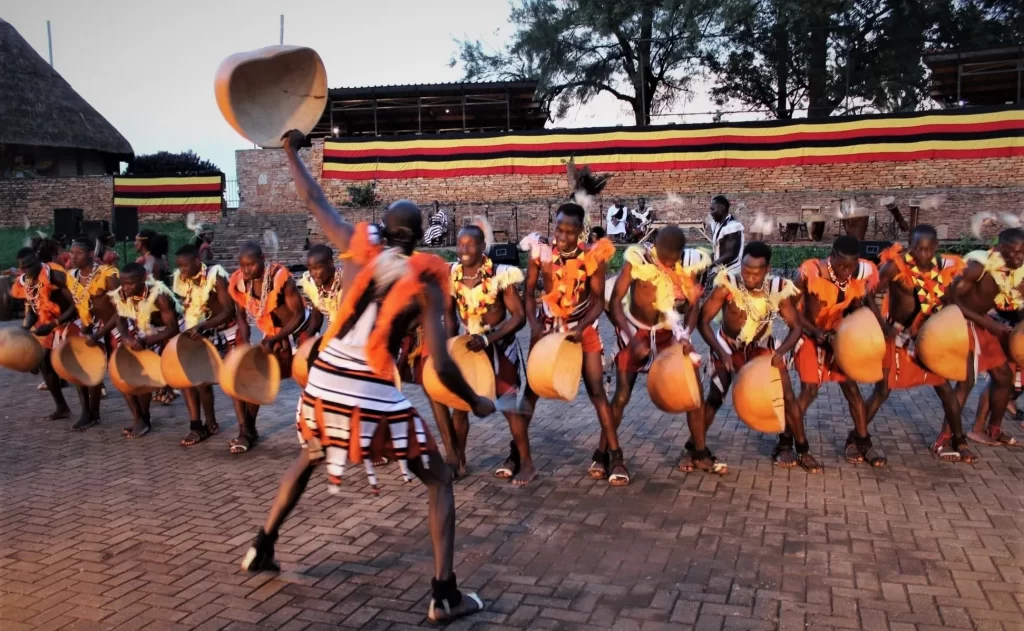
Where to do cultural Tours in Uganda. Uganda’s wildlife and landscapes often steal the spotlight, but the country’s true soul lies in its people — over 50 ethnic groups, each with distinct traditions, languages, music, and history. A cultural tour lets you step beyond the safari vehicle and into royal palaces, homesteads, drumming circles, and centuries-old kingdoms. If you’re wondering where to experience authentic Ugandan culture, here’s a guide to the best destinations across the country.
1. Buganda Kingdom — Kampala and Central Uganda
No cultural tour of Uganda is complete without exploring the Buganda Kingdom, the largest and most influential of Uganda’s traditional kingdoms, centered around Kampala. A visit here typically includes the Kasubi Tombs, the burial site of Buganda kings and a UNESCO World Heritage Site, along with the Buganda Parliament (Bulange) and the Kabaka’s Palace in Mengo.
Travelers can also visit the Uganda Museum, the country’s oldest and largest museum, showcasing traditional artifacts, musical instruments, and ethnographic displays from across Uganda’s regions. This makes an excellent starting point before heading further afield, and it pairs naturally with our safaris that begin or end in Kampala, such as any tour departing from Entebbe.
2. Batwa Cultural Encounters — Bwindi and Mgahinga
Around Bwindi Impenetrable National Park and Mgahinga Gorilla National Park, travelers can meet the Batwa people, often called the “Keepers of the Forest.” The Batwa were the original forest-dwelling inhabitants of this region before conservation policies relocated them outside the park boundaries.
A Batwa cultural experience typically includes traditional dances, demonstrations of hunting and fire-making techniques, forest-medicine knowledge, and storytelling around a campfire. It’s a moving, eye-opening addition to any gorilla trekking itinerary, and many visitors combine it with our tours that include Bwindi, giving a fuller picture of the region beyond wildlife alone.
3. Karamoja — Uganda’s Most Traditional Region
In the far northeast, near Kidepo Valley National Park, lies Karamoja, home to the semi-nomadic Karamojong people. This is one of the least-visited and most culturally intact regions in Uganda, where cattle-keeping traditions, beadwork, and age-set systems remain largely unchanged by modern influence.
Visiting a Karamojong homestead (manyatta) offers a rare glimpse into a pastoralist way of life that has all but disappeared elsewhere in East Africa. Because Karamoja is remote, it’s best combined with a Kidepo Valley safari for travelers with 7+ days who want to pair rare wildlife with equally rare cultural immersion.
4. Fort Portal and the Tooro Kingdom
Near Kibale Forest National Park, Fort Portal is home to the Tooro Kingdom, one of Uganda’s four traditional monarchies. Visitors can tour the Tooro Royal Palace, learn about the kingdom’s history, and explore the surrounding crater lakes region, dotted with volcanic lakes and traditional fishing villages.
This area also offers tea plantation tours, where you can walk through rolling tea estates and learn how one of Uganda’s major export crops is grown and processed — a relaxing, scenic addition to a chimp trekking itinerary in Kibale.
5. Ankole Cultural Experiences — Western Uganda
Around Lake Mburo National Park and the greater Mbarara region, travelers can learn about the Ankole people, famous for their long-horned Ankole cattle, a striking symbol of wealth and status in the region. Cultural visits here often include traditional milking demonstrations, local homestead visits, and storytelling about the historic Ankole Kingdom.
Because Lake Mburo is a convenient stop between Kampala/Entebbe and Bwindi, this cultural experience fits easily into longer safari routes without adding extra travel days.
6. Kigezi and Kisoro — The Kingdom of the Hills
Near Bwindi and Mgahinga, the Kigezi region is home to the Bakiga people, known for their terraced hillside farming, traditional dance (“Ekizino”), and folklore. Community-run cultural centers here allow travelers to interact directly with local families, sample traditional food, and support community development projects tied to conservation efforts around the gorilla parks.
7. Ssese Islands — Fishing Communities on Lake Victoria
For a slower-paced cultural experience, the Ssese Islands on Lake Victoria offer a glimpse into traditional fishing communities, complete with local legends about the islands’ spiritual significance to the Baganda people. It’s a relaxing detour, often combined with a few days of rest after a longer safari itinerary.
Why Combine Culture with Safari?
Cultural tourism in Uganda isn’t just an add-on — it deepens the meaning of a safari by connecting wildlife conservation with the people who have lived alongside it for generations. Many of these cultural experiences are also directly linked to community development: a portion of visitor fees typically supports local schools, health clinics, and conservation education. This aligns closely with our own commitment at Afrigaze — 20% of our profits go directly toward supporting local communities, including school materials and medical support for children in the areas we operate.
Planning Your Cultural Tour
- Combine, don’t separate — most cultural experiences sit right next to major national parks, so they slot naturally into existing wildlife or gorilla trekking itineraries.
- Respect local customs — always ask permission before photographing people, and dress modestly when visiting royal sites or rural communities.
- Book through registered operators — community-based tourism initiatives are often regulated or endorsed by the Uganda Tourism Board, which is worth checking for verified cultural sites and community tourism guidelines.
- Check UNESCO and heritage site details — for locations like the Kasubi Tombs, the UNESCO World Heritage Centre provides background on the site’s history and preservation status.
At Afrigaze Uganda Safariz, we weave cultural encounters into our safari itineraries so you experience Uganda’s people alongside its wildlife. Browse our full range of safaris or contact our team to build a trip that blends game drives, primate trekking, and authentic cultural immersion.