

Best places to see Chimps in Uganda. Uganda is one of the very best countries on Earth to see wild chimpanzees, home to several habituated communities spread across forests in the west of the country. From dense rainforest in Kibale to a dramatic riverine gorge inside Queen Elizabeth National Park, each site offers a genuinely different chimp trekking experience. This guide compares the best places to see chimps in Uganda, what makes each one distinct, and how to plan a trip that includes them — with links to the official conservation bodies that manage each site, so you can verify permit details and park rules at the source.
Unlike gorilla trekking, which is limited to just two parks in Uganda, chimpanzee trekking is available at multiple sites spread across the west of the country, giving travelers far more flexibility in how they build a primate-focused itinerary. This also means it’s easier to fit a genuine chimp encounter into almost any Uganda safari route, regardless of which other parks you’re already planning to visit.
Kibale Forest National Park: Uganda’s Chimpanzee Capital
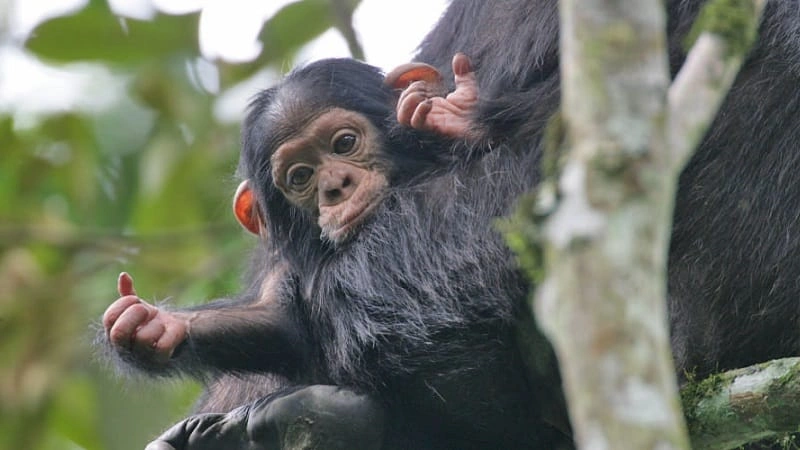
Kibale Forest National Park is widely regarded as the best place to see chimps in Uganda, with a chimp-sighting success rate among the highest in East Africa. The park is managed by the Uganda Wildlife Authority, and full details on its habituated communities are published on UWA’s official Kibale National Park page. Our 5 Days Wildlife and Primate Safari includes a dedicated Kibale chimp trek, and background on chimpanzee biology and behavior is available on UWA’s official chimpanzee species page. Kibale’s forest trails are relatively gentle compared with gorilla trekking terrain elsewhere in the country, and treks typically last two to three hours, making it a good choice for travelers who want a rewarding primate encounter without the more strenuous hiking Bwindi sometimes demands.
Kyambura Gorge in Queen Elizabeth National Park
Tucked into a steep, forested rift valley crack, Kyambura Gorge inside Queen Elizabeth National Park offers a smaller, more atmospheric chimp trekking experience than Kibale, often nicknamed the “Valley of Apes.” Because the gorge sits within the wider park, UWA’s official Queen Elizabeth National Park page covers entry rules and permit information. Combining Kyambura with the park’s savannah game drives makes it easy to pair primates with big-game viewing in a single stop — see our wildlife safari packages for itinerary ideas. Because the gorge’s chimp community ranges across a smaller area than Kibale’s, sightings here can be less predictable, but the dramatic setting — a lush, forested crack in an otherwise open savannah landscape — makes it a memorable stop regardless.
Budongo Forest and Kaniyo Pabidi, Murchison Falls
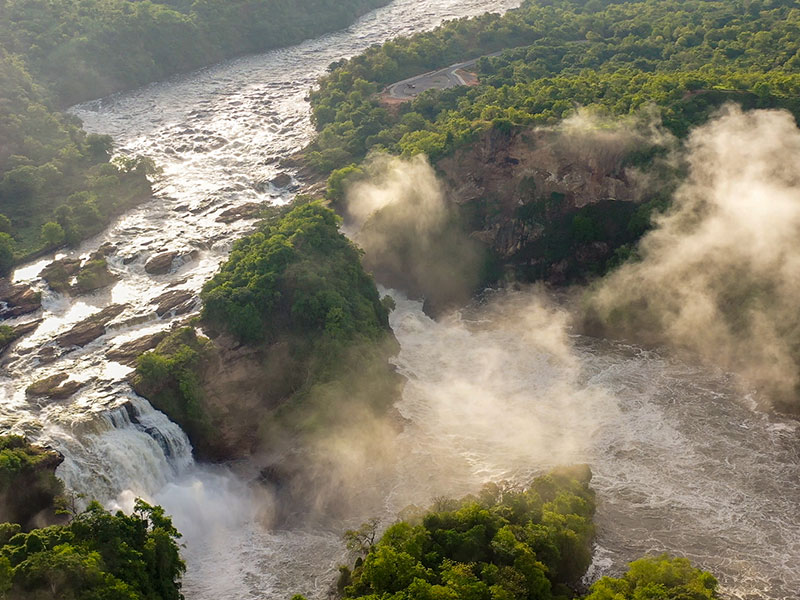
Budongo Forest, on the approach to Murchison Falls National Park, is Uganda’s largest natural forest and home to the Kaniyo Pabidi chimp trekking site. It’s a convenient add-on for travelers already visiting Murchison Falls for its waterfalls, game drives, and Nile boat cruises. UWA’s official Murchison Falls National Park page has details on the wider park, and our 10-Day Wildlife, Big 5, Chimpanzee and Gorilla Safari routes directly through this forest on its way north. Kaniyo Pabidi also offers night walks and forest birding alongside standard chimp treks, making it a good stop for travelers who want to extend a single forest visit into a fuller day of activity. As Uganda’s largest natural forest, Budongo is also home to a wide range of other primates and forest bird species, so even a quiet morning without a confirmed chimp sighting still tends to deliver plenty to see.
Kalinzu Forest Reserve
Kalinzu Forest Reserve, near Queen Elizabeth National Park, is a quieter, less-visited alternative for travelers who want a genuine chimp trek without Kibale’s higher visitor numbers. Unlike Uganda’s national parks, Kalinzu is managed by the National Forestry Authority rather than UWA, and its official Kalinzu Central Forest Reserve page lists chimp tracking among its main visitor activities, alongside forest walks and birdwatching. Because it sits so close to Queen Elizabeth National Park, Kalinzu is easy to fold into an existing western circuit as an extra chimp trekking option without significant additional driving.
Semuliki National Park
Semuliki National Park, in the remote western rift valley, offers a lower-traffic chimp trekking option set within one of Africa’s most biodiverse lowland forests. It’s less commonly visited than Kibale or Budongo, which appeals to travelers seeking a more exclusive encounter. UWA’s official Semuliki National Park page covers park access and permit details for this less-trodden route. The park’s hot springs and distinctive Central African forest species also make it worth combining chimp tracking with a broader half-day of exploration rather than treating the trek as the only activity on offer.
Chimpanzee Trekking vs. the Habituation Experience
Most sites offer a standard trekking permit, allowing roughly one hour with a habituated chimp community once trackers locate them. Kibale also offers a longer chimpanzee habituation experience, giving visitors several hours alongside researchers as a community becomes accustomed to human presence. Both options are booked through the Uganda Wildlife Authority, and it’s worth confirming current permit pricing and availability directly with UWA before finalizing your dates. Permits are limited per site per day, so booking several weeks ahead is strongly recommended during peak travel months, and even further ahead if you specifically want the longer habituation experience rather than a standard one-hour trek.
Best Time to See Chimps in Uganda
Chimp trekking is possible year-round, but the drier months — June to September and December to February — offer firmer forest trails and generally easier hiking conditions. Current seasonal forecasts are published by the Uganda National Meteorological Authority, which is worth checking before booking, particularly for a first-time visit during the shoulder rainy months of March to May and October to November. Chimps remain active and trackable in all seasons, so wetter months mainly affect trail conditions and comfort rather than your actual odds of a sighting.
Combining Chimp Tracking with Gorilla Trekking and Other Wildlife
Because several chimp trekking sites sit close to Uganda’s other headline attractions, most visitors combine chimp tracking with gorilla trekking in Bwindi or Mgahinga, or with wildlife viewing at Lake Mburo National Park. Our 7 Days Best Uganda Safari is built specifically around this kind of multi-park, multi-primate circuit, and the Uganda Tourism Board offers a useful overview of how these parks connect across the country for travelers planning their own route. Because Uganda’s western parks sit along a single continuous corridor, a well-planned circuit can move from chimps to gorillas to savannah wildlife without significant backtracking, making multi-primate itineraries considerably more efficient here than in most other African safari destinations.
Planning Your Chimp Trekking Trip
Start by deciding which site fits your itinerary and travel style — Kibale for the highest sighting odds, Kyambura or Kalinzu for something quieter, Budongo if you’re already heading to Murchison Falls, or Semuliki for a genuinely off-the-beaten-path forest. Browse our full range of Uganda destinations and safari packages, read more about us, or check our FAQ page for common trekking questions. Wear sturdy, closed hiking shoes, pack a light rain jacket regardless of season, and bring binoculars if you also want to make the most of the birdlife found in every one of these forest sites.
Ready to plan your chimp trekking trip? Get in touch for a custom Uganda itinerary, or head back to our homepage to start exploring.