

Lake Bunyonyi Visit. A Lake Bunyonyi visit is one of the most rewarding additions to any Uganda itinerary — a calm, terraced highland lake that offers safe swimming, canoeing, and island culture just a short drive from the country’s gorilla trekking parks. Whether you’re planning a dedicated lake getaway or folding it into a wider wildlife circuit, this guide covers exactly how to get there, what to do once you arrive, and what official requirements to sort out before you travel. Because so much of what makes this trip work smoothly comes down to getting the practical details right — permits, timing, and travel documentation — we’ve linked directly to the official government and conservation bodies that govern each of them, so you can verify everything at the source rather than relying on secondhand information.
Where Is Lake Bunyonyi and How Do You Get There?
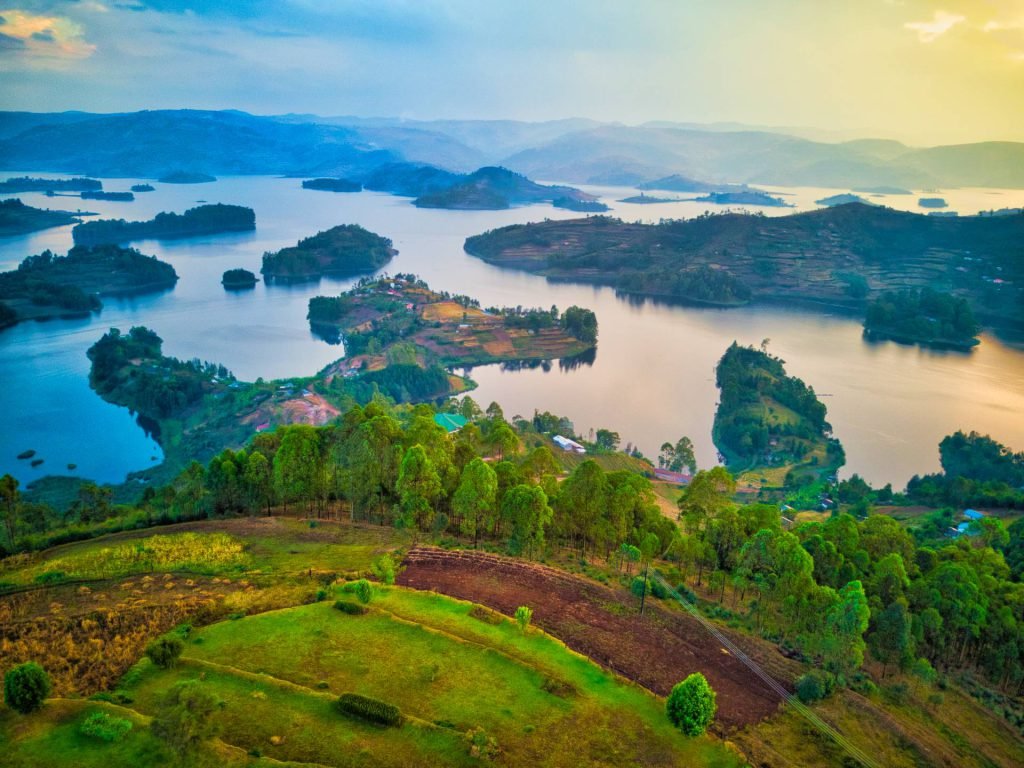
Lake Bunyonyi sits in southwestern Uganda’s Kigezi highlands, close to the town of Kabale and roughly 25 kilometers from Kisoro. It lies within easy reach of both Bwindi Impenetrable National Park and Mgahinga National Park, which is why most visitors combine it with a gorilla trekking trip rather than visiting it as a standalone destination. Browse our full list of Uganda destinations and safari packages to see how a Bunyonyi stop can be worked into your route, and confirm entry requirements on the Ministry of Tourism, Wildlife and Antiquities website before you travel.
Most visitors reach the lake by private vehicle, either as part of a guided safari or as an add-on to an independent road trip through the southwest. The final stretch of road down to the lakeshore is often unpaved and steep, so a sturdy 4×4 with an experienced driver is strongly recommended, particularly during the rainy season when some sections can become slippery.
Top Things to Do During Your Lake Bunyonyi Visit
The lake’s appeal lies in its slower pace. Popular activities include:
- Dugout canoeing — self-paddled or guided trips between the lake’s 29 islands.
- Swimming — safe and common, since the lake has no bilharzia or crocodiles.
- Island tours — short excursions to sites such as Punishment Island, rich in local Bakiga history.
- Birdwatching — the wetland fringes support species rarely seen in the forest parks nearby.
- Nature walks — gentle trails across the terraced hillsides above the water.
Together these activities make Lake Bunyonyi a natural, restorative counterpoint to the early starts required for gorilla trekking in Bwindi or chimpanzee tracking in Kibale Forest National Park.
This makes it a rarity among East Africa’s larger lakes, where swimming is usually discouraged. Many lodges also offer sunset canoe trips, which pair well with the cooler evening air at this altitude and make for some of the most memorable photography of a Uganda trip.
Combining Lake Bunyonyi with Gorilla Trekking in Bwindi
Most travelers experience Lake Bunyonyi as a rest stop before or after gorilla trekking, since several Bwindi trailheads sit close enough for a comfortable same-day transfer. Gorilla permits are issued exclusively by the Uganda Wildlife Authority, and full details on availability, pricing, and booking are published on UWA’s official gorilla tracking page. Our 10-Day Wildlife, Big 5, Chimpanzee and Gorilla Safari and shorter 7 Days Best Uganda Safari can both be tailored to include a night at the lake, and UWA’s official Bwindi Impenetrable National Park page is worth reading in advance for park rules and trekking conditions. Because permits are limited and tied to a specific date, it’s best to confirm availability well before finalizing your Bunyonyi accommodation, so the two can be scheduled in the right order.
Extending the Trip: Mgahinga, Queen Elizabeth and Murchison Falls
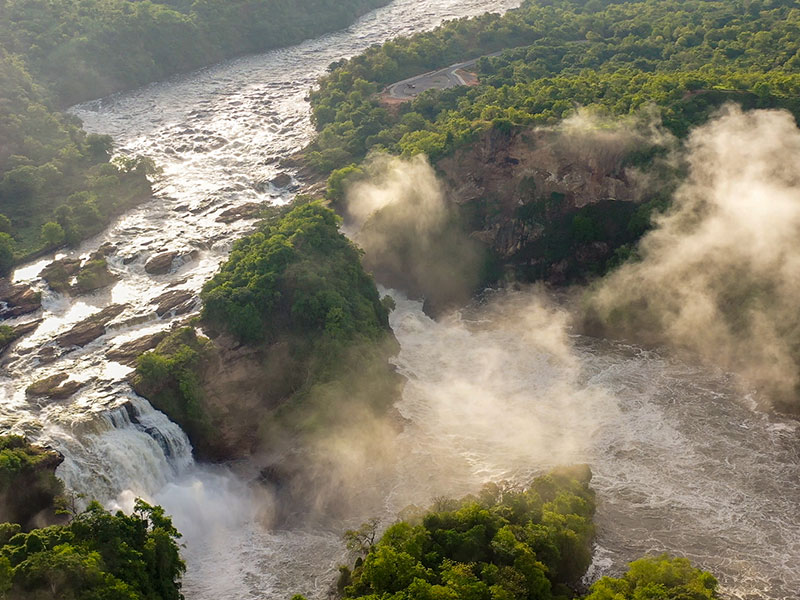
Travelers with more time often pair Lake Bunyonyi with golden monkey tracking at Mgahinga National Park — detailed on UWA’s official Mgahinga Gorilla National Park page — or a wider circuit through Queen Elizabeth National Park and Murchison Falls National Park. Our 5 Days Wildlife and Primate Safari and 3 Days Wildlife Encounter packages illustrate how these parks connect into a single Uganda itinerary, with Bunyonyi added as the relaxing final stop. Compared with Lake Mburo National Park, Uganda’s other well-known lake destination, Bunyonyi offers a cooler, highland alternative better suited to swimming and canoeing than game drives, while Lake Mburo remains the better choice for zebra, impala, and boat-based wildlife viewing.
Best Time to Visit and Weather
Lake Bunyonyi can be visited year-round, but most travelers align their trip with Uganda’s dry seasons — June to September and December to February — since these months also offer the easiest gorilla trekking conditions. Current forecasts and seasonal rainfall data are published by the Uganda National Meteorological Authority, which is worth checking before finalizing travel dates, particularly if visiting during the shoulder rainy months of March to May or October to November. Because the lake sits at a cooler, higher altitude than much of Uganda’s savannah country, evenings can feel chilly year-round regardless of season, so a warm layer is worth packing whenever you travel.
Visa, Health and Safety Requirements
Most travelers need a visa to enter Uganda, and applications should be made through the official Uganda Immigration e-visa portal rather than third-party sites. A yellow fever vaccination certificate is generally required for entry, and up-to-date health guidance for travelers to Uganda, including malaria and yellow fever information, is available from the U.S. CDC’s Uganda travel health page. It’s worth confirming current entry rules directly with these official sources before booking, since requirements are periodically updated. Travelers should also carry printed or digital copies of their visa approval and vaccination certificate while in transit, since these are commonly checked at border points and park entrances throughout the southwest.
Where to Stay and Responsible Tourism
Accommodation around the lake ranges from budget island camps reachable only by canoe to comfortable mainland lodges with private decks and hot showers. Because several properties sit on their own small islands, confirm in advance whether boat transfers from the mainland jetty are included, as this affects both cost and how easily you can reach other parts of the lake for meals or activities. Choosing locally owned properties channels tourism revenue directly into the surrounding Bakiga farming communities. Because the lake sits near Bwindi, a UNESCO-listed site recognized on the official UNESCO World Heritage list, travelers are encouraged to follow the same respectful, low-impact standards around the lake that apply inside the national parks. The Uganda Tourism Board promotes several community-based tourism initiatives in the Kigezi region worth supporting during your stay, from local craft markets in Kabale to community-guided canoe trips that put more of your spending directly into the hands of the families who farm the lake’s terraced hillsides.
Planning Your Lake Bunyonyi Visit
The easiest way to plan a Lake Bunyonyi visit is to fold it into an existing gorilla trekking or wildlife itinerary rather than booking it separately, since the marginal cost of adding a night or two at the lake is usually small compared with the rest of a multi-day safari. Start by confirming your gorilla or golden monkey trekking dates, since permits are the least flexible part of any itinerary, and then let the lake stop fall naturally before or after that trek depending on which trailhead you’re assigned to.
Read more about us, check common questions on our FAQ page, and get in touch for a custom itinerary built around your travel dates. Whether this is your first trip to Uganda or a return visit built around a specific park, a well-timed Lake Bunyonyi stop is one of the simplest ways to add genuine rest and scenery to an otherwise wildlife-packed schedule.
Ready to add Lake Bunyonyi to your trip? Explore our Uganda safari packages, browse all destinations, or head back to our homepage to start planning.