

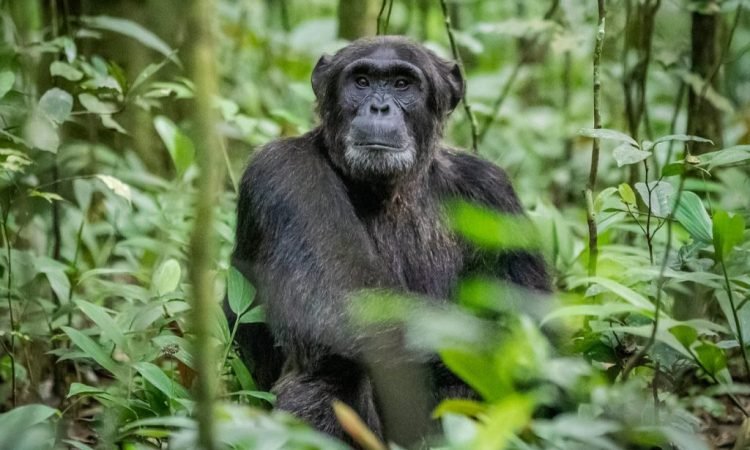
Chimps with Gorilla Trekking Safaris in Uganda. Uganda is one of the only countries where you can track both chimpanzees and mountain gorillas on the same trip without leaving the country, and the two experiences complement each other more than people expect: chimps are fast, noisy, and endlessly entertaining, while gorillas are calm, quiet, and immense. Here’s how to combine them properly, put together by Afrigaze Uganda Safariz.
Why Combine Chimps and Gorillas
Chimpanzee tracking and gorilla trekking are genuinely different experiences, not variations on the same theme. Chimps move constantly through the forest canopy in vocal, active family groups, while a gorilla trek ends with an hour of quiet, close observation of an animal that barely moves. Doing both on one trip gives a much fuller picture of Uganda’s primates than either alone, and since Uganda holds strong populations of both, there’s no need to compromise on either encounter to fit them into a single itinerary. Few other countries let you do both in the same national itinerary without a long-haul flight in between, which is part of what makes Uganda’s primate offering distinct even among other East African safari destinations.
Where to Track Chimps in Uganda
Kibale Forest National Park, covered on the official UWA Kibale page, is Uganda’s premier chimp tracking destination and holds the country’s highest density of habituated chimpanzee communities. Travellers short on time or already routed through Murchison Falls National Park can also track chimps in the adjoining Budongo Forest, or in the Kyambura Gorge within Queen Elizabeth National Park, both smaller-scale alternatives to Kibale. Kibale’s chimp community is larger and better habituated than either alternative, so it remains the better choice whenever the itinerary allows the extra travel time to reach it.
Chimp Permit Prices Compared
A standard chimp tracking permit in Kibale costs $250 for foreign non-residents, $200 for foreign residents, and 180,000 Ugandan shillings for East African citizens, according to the official UWA Conservation Tariff. Kyambura Gorge is considerably cheaper at $100 for foreign non-residents, reflecting its smaller, less established chimp community, and a full-day Kibale chimp habituation experience, extending your time with the group to four hours, costs $300.
| Activity | Foreign Non-Resident | Foreign Resident | East African Citizen |
|---|---|---|---|
| Kibale chimp tracking | $250 | $200 | UGX 180,000 |
| Kyambura Gorge chimp tracking | $100 | $80 | UGX 50,000 |
| Kibale chimp habituation (full day) | $300 | $250 | UGX 250,000 |
| Gorilla trekking (Bwindi/Mgahinga) | $800 | $700 | UGX 300,000 |
Getting from Kibale to the Gorilla Parks
Kibale sits roughly 4 to 5 hours by road from Bwindi Impenetrable National Park, detailed on the official UWA Bwindi page, on routes that pass through Fort Portal and Ishasha, making it one of the more natural primate-to-primate routings in the country. This is considerably shorter than the drive from Kampala to either park individually, which is part of why chimp-then-gorilla itineraries routed through Kibale tend to flow better than trying to bolt gorilla trekking onto a Kampala-based short safari. Roads on this stretch are maintained in part by the Uganda National Roads Authority, worth checking ahead of a wet-season trip.
How Many Days You Actually Need
A realistic combined itinerary needs a minimum of five to six days: one day travelling to Kibale, a morning for chimp tracking, a day travelling on to Bwindi or Mgahinga, and a full day for the gorilla trek itself, with a buffer day for road delays. Our 5-day wildlife and primate safari covers the chimp side well if gorillas aren’t required, while our 10-day wildlife, chimpanzee and gorilla safari is built specifically around doing both properly, without rushing either encounter.
Rules and Guidelines for Both Activities
Both chimp tracking and gorilla trekking follow strict UWA guidelines designed to protect the animals from human disease transmission, including minimum viewing distances, group size limits, and a requirement to stay home if you’re feeling unwell on trekking day. The full rules for both activities are set out in UWA’s official gorilla and chimpanzee tracking guidelines, worth reading in full before you travel rather than on the morning of your trek. Both activities also enforce a maximum group size per gorilla family or chimp community, which is part of why booking permits for a combined trip well in advance matters more than for a standard single-park safari.
Should You Do Chimps Before or After Gorillas?
Most itineraries route chimps first, since Kibale sits between Kampala and Bwindi geographically and doing it first avoids backtracking. There’s no rule requiring this order, but starting with the more physically active, faster-paced chimp trek while you’re fresh, then finishing with the calmer, more contemplative gorilla encounter, tends to work well as a narrative arc for the trip as well as a logistical one.
Extending the Trip Further
Travellers with more time often extend a chimp-and-gorilla itinerary into Rwanda afterward, since Bwindi and Mgahinga both sit close to the border. Our 8-day best of Uganda and Rwanda and 7-day Uganda gorilla safari with Rwanda culture both build on this same chimp-then-gorilla routing, and our fuller 14-day best of Uganda safari adds Murchison Falls and Queen Elizabeth into the same trip for travellers who want the full range of Uganda’s wildlife rather than just its primates.
Where to Stay for a Combined Trip
In Bwindi, our own Gorilla Safari Lodge sits close to the park and makes a convenient base for the gorilla leg of a combined itinerary, while Kibale has its own cluster of forest-edge lodges near the main trailhead. Booking accommodation in both locations well ahead of your dates matters more on a combined trip than a single-park safari, since both legs need to align with fixed permit dates rather than flexible arrival windows.
Planning Your Combined Safari with Afrigaze Uganda Safariz
Uganda’s wildlife tourism, including its two flagship primate experiences, is promoted by the Uganda Tourism Board and the Ministry of Tourism, Wildlife and Antiquities. Most visitors will need a Uganda visa through the official Uganda Directorate of Citizenship and Immigration Control portal, and you can confirm current permit availability for both parks through the official Uganda Wildlife Authority website, with payment and cancellation terms explained in UWA’s official booking terms. Browse our full destinations and safaris pages, see recent trip photos on our gallery page, check our FAQ page, or reach out through our contact page to plan a combined chimp and gorilla itinerary.
Want both chimps and gorillas on one Uganda trip? Talk to our team and we’ll route Kibale and Bwindi into a single, well-paced itinerary.
Frequently Asked Questions
How many days do I need to see both chimps and gorillas in Uganda?
A minimum of five to six days, allowing travel time between Kibale and Bwindi or Mgahinga plus a full day for each trek.
Is chimp tracking cheaper than gorilla trekking?
Yes, considerably. A Kibale chimp permit costs $250 versus $800 for a standard gorilla permit, making chimp tracking a much lower-cost add-on to a gorilla-focused trip.
Can I do chimp tracking somewhere closer if I’m short on time?
Yes. Kyambura Gorge in Queen Elizabeth National Park offers a shorter, cheaper chimp tracking option if a dedicated Kibale visit doesn’t fit your schedule.
Chimps and gorillas together make for one of Uganda’s most complete wildlife experiences, and with the right routing, neither has to be rushed to fit the other in. Get in touch with Afrigaze Uganda Safariz to plan yours.