

Combining Lake Mutanda with Gorilla Trek. If you are planning a trip to Bwindi Impenetrable National Park for a face-to-face encounter with mountain gorillas, do not stop there. A short drive away lies Lake Mutanda, one of Uganda’s most photogenic and least crowded lakes, tucked between the Virunga volcanoes and the misty hills of Kisoro District. Combining Lake Mutanda with gorilla trekking gives you the best of both worlds: the adrenaline and wonder of tracking a wild gorilla family through the forest, followed by the calm, reflective beauty of a canoe gliding across still water with volcanoes on the horizon. This guide from Afrigaze Uganda Safariz explains why this pairing works so well, how to plan it, and what to expect on each leg of the journey.
Why Lake Mutanda Is the Ideal Gorilla Trekking Add-On
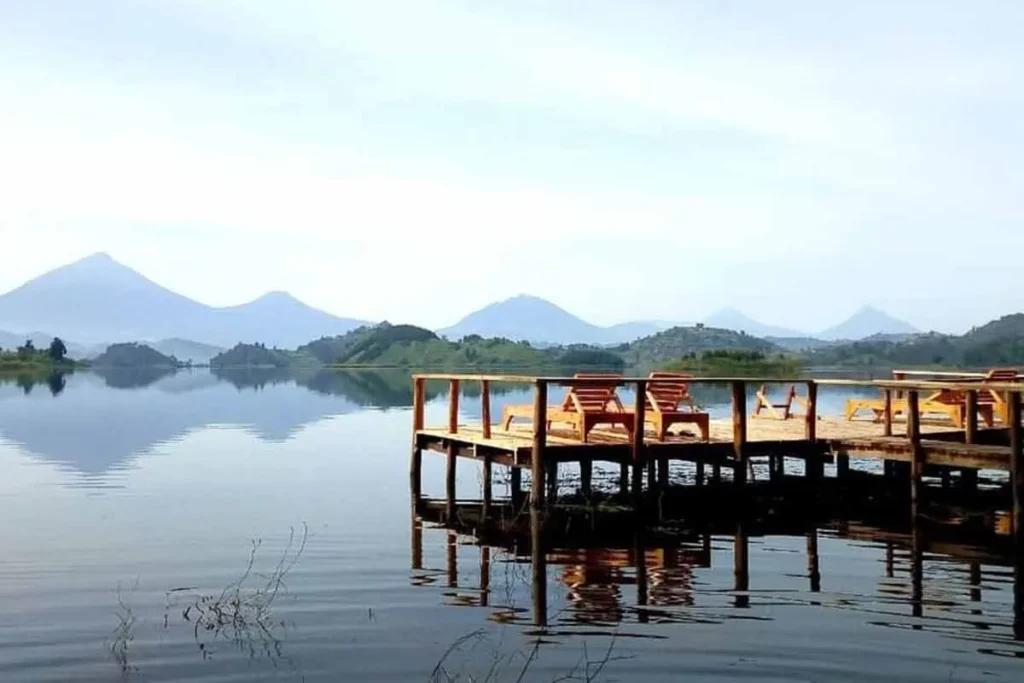
Lake Mutanda sits at roughly 1,800 metres above sea level in Kisoro District, close to the borders of Rwanda and the Democratic Republic of Congo. It is fed by streams flowing down from the Virunga volcanic range, and on a clear day you can see Mount Muhabura, Mount Sabyinyo, and Mount Gahinga rising from the water’s edge. Unlike the busier lakeside towns further north, Mutanda remains refreshingly quiet, dotted with small fishing villages, papyrus-lined bays, and a scattering of islands that locals will happily paddle you around in a dugout canoe.
For travellers heading to the Nkuringo or Rushaga sectors of Bwindi for gorilla trekking, Lake Mutanda is barely an hour’s drive away, making it a natural stopover rather than a detour. After the physical demands of a trek through steep, forested terrain, spending a night or two on the lake offers genuine rest: warm sunshine, gentle water activities, and some of the most dramatic volcano views in the region.
Planning Your Gorilla Trek in Bwindi or Mgahinga
Mountain gorilla trekking is the headline activity of any southwest Uganda itinerary, and it deserves careful planning. Treks are organised through the four trekking sectors of Bwindi, Buhoma, Ruhija, Rushaga, and Nkuringo, plus Mgahinga Gorilla National Park near Kisoro. Every trek requires a gorilla permit, issued exclusively by the Uganda Wildlife Authority, the government body responsible for managing the country’s national parks and protected wildlife.
Because only a limited number of permits are released for each habituated gorilla family every day, booking several months ahead, especially for the June to September and December to February peak seasons, is strongly recommended. Our team at Afrigaze has put together a practical breakdown of the process in our post on how to book a gorilla permit in Uganda, covering costs, timing, and what documents you will need. Travellers wanting to verify licensing details for tour operators can also check the Uganda Tourism Board website, the national authority overseeing tourism standards in the country.
Treks typically begin early in the morning with a briefing at the park headquarters, followed by a hike that can last anywhere from thirty minutes to several hours depending on where the gorilla family has moved overnight. Once you find them, you are permitted one full hour to observe the group, watching juveniles play, mothers groom their young, and the dominant silverback keep a watchful eye over his family. It is widely described as one of the most moving wildlife experiences on the continent, and it is easy to see why travellers plan entire Uganda itineraries around it.
What to Do on Lake Mutanda
Once your trek is complete, Lake Mutanda offers the perfect change of pace. Popular activities include:
Canoeing between the islands. Traditional dugout canoes, paddled by local guides, take visitors across the calm waters to small islands with names tied to local folklore. It is a gentle, scenic way to spend an afternoon after a demanding trek day.
Nature walks and birdwatching. The shoreline and surrounding hills are rich in birdlife, and guided walks through nearby villages offer a window into the daily rhythms of the Bakiga and Bafumbira communities who farm the terraced slopes above the lake.
Volcano views and photography. Sunrise and sunset over Mount Muhabura and the Virunga range are, for many visitors, the highlight of their stay. The still water creates near-perfect reflections on calm mornings.
Cultural encounters. Several lakeside lodges arrange visits to local farms, markets, or community projects, giving travellers a chance to learn about life in this part of southwestern Uganda beyond the national parks.
For accommodation guidance in the wider Bwindi and Kisoro area, including lodges positioned for easy access to both the trekking trailheads and Lake Mutanda, take a look at our detailed post on where to stay in Bwindi.
Sample Itinerary: Gorillas and Lake Mutanda in One Trip
A well-paced itinerary might look like this:
- Day 1: Travel to the Bwindi or Mgahinga region and settle into your lodge.
- Day 2: Gorilla trekking in Nkuringo or Rushaga sector, followed by transfer to Lake Mutanda (roughly 45 minutes to an hour depending on your starting point).
- Day 3: A relaxed morning of canoeing and village walks around the lake, with time to simply enjoy the volcano scenery.
- Day 4: Depart for your next destination or return journey.
This structure works equally well as a standalone southwest Uganda getaway or as an extension to a broader safari covering Queen Elizabeth National Park or Lake Mburo National Park. Travellers looking for a ready-made multi-day option that already includes gorilla trekking alongside other wildlife experiences can browse our 10-Day Wildlife & Primate Safari, which can be customized to include a Lake Mutanda stopover.
Best Time to Visit
Uganda’s dry seasons, from June to September and December to February, offer the most comfortable trekking conditions, with drier trails and lower rainfall. That said, gorilla trekking is possible year-round since the forest is tropical and rain can fall at any time. Lake Mutanda is pleasant throughout the year too, though clearer skies during the dry months mean better volcano views and photography conditions. If your priority is combining both activities with minimal disruption from rain, the dry season windows remain the safest choice, though the lush green scenery of the wetter months has its own appeal for photographers and birders.
Practical Tips for Combining the Two Experiences
- Pack sturdy, waterproof hiking boots for the trek and a lighter pair of shoes for lake activities.
- Bring a change of clothes for after the trek, since forest hikes are often muddy and sweaty.
- Carry cash in small denominations for community visits, canoe trips, and tipping guides and porters.
- Confirm your gorilla permit and lodge bookings well in advance, particularly if travelling during peak months.
- Allow a buffer day in your itinerary in case a trek runs longer than expected.
Let Afrigaze Uganda Safariz Plan It for You
Combining Lake Mutanda with gorilla trekking is one of the most rewarding ways to experience southwest Uganda: intense, humbling wildlife encounters balanced by quiet, scenic downtime on the water. At Afrigaze Uganda Safariz, we design tailor-made itineraries that link Bwindi’s gorilla families with Lake Mutanda’s canoe trips and volcano views, along with any other destinations you would like to add to your journey. Reach out through our contact page and let our team build a trip around exactly what you want to see and experience.