

Gorilla trek in Rwanda or Uganda. Few travel experiences on earth compare to standing a few meters from a family of wild mountain gorillas in the misty forests of East Africa. Gorilla trekking in Rwanda and Uganda is consistently ranked among the world’s greatest wildlife encounters, and for good reason: mountain gorillas exist nowhere else on the planet except the Virunga Massif and the Bwindi Impenetrable Forest, shared across Uganda, Rwanda, and the Democratic Republic of Congo. If you are planning a primate safari to Africa, this guide walks you through everything you need to know — from choosing a destination and booking permits to what to pack and when to go — so your gorilla trek is unforgettable for all the right reasons.
At Afrigaze Uganda Safariz, we have guided travellers through Uganda and Rwanda’s forests for years, and gorilla trekking remains the single most requested experience on our safaris. Below, we break down where to go, what it costs, and how to prepare.
Why Gorilla Trekking Belongs on Every Wildlife Lover’s Bucket List
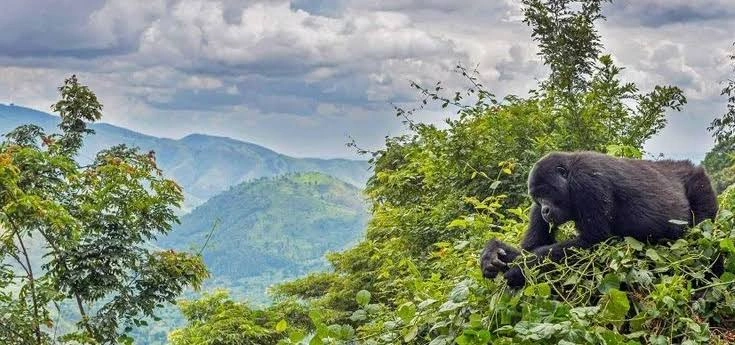
Mountain gorillas (Gorilla beringei beringei) are critically endangered, with roughly 1,000 individuals left in the wild. Unlike most endangered species, however, their population has been slowly growing thanks to decades of dedicated conservation work, community engagement, and regulated tourism. Every trekking permit sold directly funds ranger patrols, veterinary care, and community development projects around the parks, which means travellers who trek gorillas are not just ticking off a bucket-list item — they are actively contributing to the survival of the species.
A trek typically begins early in the morning at a park headquarters, where trackers who have already located a habituated gorilla family radio back their position. Visitors then hike through dense, humid forest — anywhere from 30 minutes to several hours depending on where the gorillas have moved — before spending a strictly regulated one hour observing the family at close range. Watching a silverback beat his chest, juveniles tumble through the undergrowth, or a mother cradle her infant is an experience that stays with travellers long after they leave Africa.
Bwindi Impenetrable National Park, Uganda
Bwindi Impenetrable National Park in southwestern Uganda is home to nearly half of the world’s remaining mountain gorilla population, spread across four trekking sectors: Buhoma, Ruhija, Rushaga, and Nkuringo. Each sector has its own habituated gorilla families and slightly different terrain, so travellers can choose based on fitness level and where they plan to stay. Bwindi’s forest is ancient and dense — its name is well earned — with steep ridges and thick undergrowth that make for a true jungle adventure. If you would like insider tips on lodging near the park before your trek, our guide on where to stay in Bwindi covers everything from budget guesthouses to luxury forest lodges.
Mgahinga Gorilla National Park, Uganda
Tucked into the Virunga volcanoes on Uganda’s border with Rwanda and the DRC, Mgahinga Gorilla National Park is Uganda’s smaller and quieter gorilla destination. It usually hosts a single habituated family, the Nyakagezi group, offering just eight permits a day. Because it sees far fewer visitors than Bwindi, Mgahinga appeals to travellers who want a more exclusive, off-the-beaten-path experience, and it can also be combined with golden monkey tracking on the same volcanic slopes.
Volcanoes National Park, Rwanda
Across the border, Volcanoes National Park is Rwanda’s flagship gorilla destination and the site of the late Dian Fossey’s pioneering gorilla research. Set against the dramatic backdrop of the Virunga Mountains, the park offers around a dozen habituated gorilla families and is famous for its relatively easier terrain and shorter drive times from Kigali, Rwanda’s capital — most lodges are only two to three hours away. Rwanda has deliberately positioned itself as a high-value, low-volume gorilla trekking destination, which means fewer tourists per group and a more polished visitor experience overall, though at a higher permit cost than Uganda.
Uganda or Rwanda: Which Should You Choose?
This is one of the most common questions we receive, and the honest answer is that it depends on your budget, time, and travel style. Uganda’s gorilla permits are considerably more affordable, and Bwindi can easily be combined with other Ugandan highlights such as Queen Elizabeth National Park for game drives and boat cruises, or Kibale Forest National Park for chimpanzee tracking. Rwanda, on the other hand, offers shorter travel distances, smoother roads, and a slightly more comfortable trekking experience, making it ideal for travellers with limited time or a preference for added comfort. Many of our guests choose to combine both countries in a single itinerary, trekking gorillas in one park and exploring wildlife in the other.
How Much Does a Gorilla Trekking Permit Cost?
Permit prices are set by government wildlife authorities and are non-negotiable, regardless of which tour operator you book with. In Uganda, a gorilla permit costs $800 per person, issued directly by the Uganda Wildlife Authority (UWA), the government body responsible for managing all of Uganda’s national parks. In Rwanda, a permit costs $1,500 per person, issued by the Rwanda Development Board (RDB), Rwanda’s tourism and conservation authority. Both fees include park entry, a ranger guide, and one hour with the gorillas, though transport, accommodation, and porter fees are extra. Because only a limited number of permits are released daily — around 152 in Bwindi, 8 in Mgahinga, and roughly 96 in Volcanoes National Park — booking well in advance is essential, especially for travel during the June to September and December to February peak seasons. For a full walkthrough of the Ugandan process, see our guide on how to book a gorilla permit in Uganda.
Best Time to Go Gorilla Trekking
Gorilla trekking happens year-round in both countries, since permits are limited daily regardless of season. That said, the dry seasons — roughly June to September and December to February — offer firmer trails and lighter rainfall, making the hike more comfortable. The wetter months, particularly March to May and October to November, bring lush scenery and thinner crowds, along with lower rates at many lodges, but trails can be muddy and slippery. There is truly no bad time to trek; it simply comes down to your tolerance for rain versus your preference for quieter forests.
What a Day of Gorilla Trekking Looks Like
Trekking days start early, usually with a 7:00 or 7:30 a.m. briefing at the park headquarters, where rangers assign groups of up to eight visitors to a specific gorilla family based on fitness levels and the family’s last known location. From there, the hike itself can range from a gentle 45-minute walk to a demanding four- or five-hour climb through steep, muddy terrain, depending on how far the gorillas have travelled overnight. Porters are available to carry bags and assist with the climb, and hiring one is both a practical decision and a direct way to support the local community. Once the family is located, visitors get a strictly enforced hour to observe, photograph, and simply take in the experience before making the return hike.
What to Pack for Your Trek
Preparation makes a real difference to how much you enjoy the hike. Waterproof, sturdy hiking boots are essential, along with long trousers and long-sleeved shirts tucked in to protect against nettles and safari ants. A rain jacket is a must regardless of season, since forest weather is unpredictable. Gardening gloves help when grabbing onto vegetation on steep sections, and a daypack with water, snacks, and a dust mask (recommended for those trekking with a cold, since gorillas are susceptible to human respiratory illnesses) rounds out the essentials. A good zoom lens or binoculars will also make a noticeable difference in photographing the gorillas from the required seven-metre distance.
Combining Gorilla Trekking with Other Uganda and Rwanda Highlights
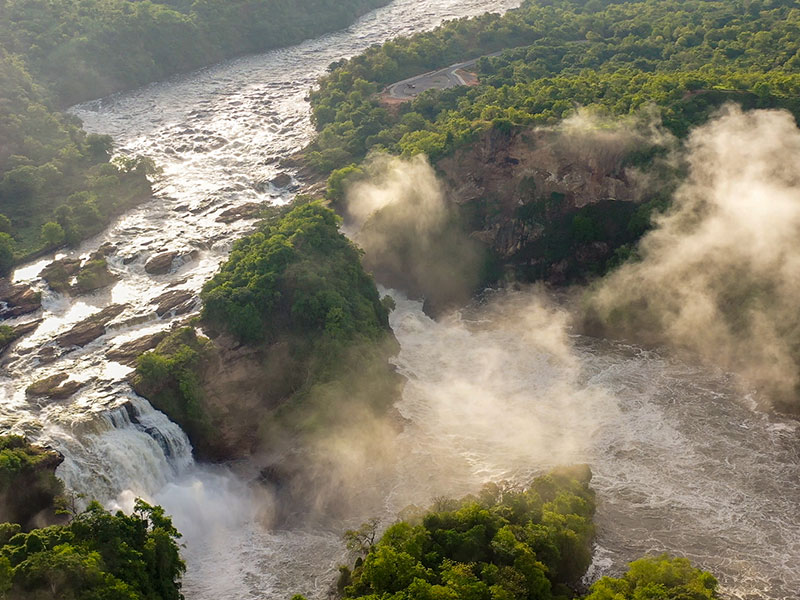
Because permits only guarantee a single hour with the gorillas, most travellers extend their trip to explore more of the region. In Uganda, gorilla trekking pairs naturally with a boat cruise on the Kazinga Channel in Queen Elizabeth National Park, a game drive through Murchison Falls National Park, or a cultural encounter such as our recommended cultural tours in Uganda. Travellers with more time often combine gorillas with chimpanzee tracking, savannah game drives, and community visits into a single, richly varied Uganda and Rwanda safari. Browse our full range of gorilla trekking and wildlife safaris to see sample itineraries.
Responsible and Sustainable Gorilla Tourism
Gorilla trekking is one of the clearest examples of tourism directly funding conservation. Permit revenue in both countries supports anti-poaching patrols, veterinary monitoring of gorilla families, and revenue-sharing schemes that channel funds into schools, health clinics, and infrastructure in communities bordering the parks. Strict rules — including the seven-metre distance rule, the one-hour time limit, group size caps of eight visitors, and a minimum age of 15 for trekkers — exist specifically to minimise stress and disease transmission to the gorillas. Choosing a licensed, community-conscious operator, respecting park rules, and hiring local porters all help ensure your visit leaves a positive footprint.
Booking Your Gorilla Trekking Safari with Afrigaze Uganda Safariz
Gorilla trekking is a bucket-list experience that rewards careful planning, and permit scarcity means early booking really does matter. At Afrigaze Uganda Safariz, we handle permit bookings with the Uganda Wildlife Authority and Rwanda Development Board directly on your behalf, pair you with experienced local guides, and build an itinerary around the parks, lodges, and pace that suit you best. Whether you dream of trekking through Bwindi’s ancient forest, tracking gorillas below Rwanda’s volcanoes, or combining both countries into one unforgettable journey, our team is ready to help. Get in touch with us today to start planning your gorilla trekking adventure in Uganda and Rwanda.